Religious Liberty conference at Uni of Notre Dame, Sydney

 The University of Notre Dame Australia School of Law and Business will hold its 11th Annual Religious Liberty Lecture on Thursday 11th September 2025 – 5:30pm for 6pm, at St Benedict’s Hall, 104 Broadway, Chippendale, Sydney. A full day Annual Religious Liberty Conference will follow on Friday 12th September 2025 from 9am. 

More details and registration information can be seen in this flyer:

While the official RSVP date has passed, the organisers assure me they would still welcome registrations! I will be speaking on the vilification and hate speech issues, and there will be a number of other important papers presented on the day.

Vilification laws and religious free speech

I am presenting a paper on “Hate Speech – Vilification Laws and Threats to Freedom” this week, and a copy is available here to download for those interested. As well as comment on a number of other cases, there is some comment on the recent Wertheim v Haddad s 18C decision, and the litigation involving “Billboard Chris”.

“Hate speech” and religious freedom- recent developments in Australia

Recently there have been a number of legislative moves or proposals attempting to deal with issues around the area of “hate speech”. The term of course is problematic- we will try to unpack it shortly. But the context, in Australia at least, is the shocking rise in the number of anti-semitic slogans and actual violence being seen in the last few months. Insults have been daubed on buildings and cars, fires lit at buildings associated with the Jewish community. And more recently, we have the shocking spectacle of two nurses from Bankstown Hospital saying on a video which has gone all over the world, that they would either like to kill their Israeli patients, or have already done so!

Part of the response of governments, at the Federal and State level, has been to either enact or propose laws punishing “hate speech”. The term itself is ambiguous. Does it mean speech “motivated” by hate? Or speech expressing hate? Or speech encouraging others to hate? I think we can all agree that, at one end of a spectrum, speech urging commission of violence against others should be unlawful. But what about expressing disagreement with moral choices made about sexual activity? Such speech might not be motivated by hate, but by concern for the bad effects of the behaviour, including contravening of divine law. Yet it might be perceived to be “hateful” by some who hear it.

It is regularly asserted that religiously based violence is somehow connected to speech insulting people on the basis of their religion. Yet some scholars note that there is little evidence produced that this is actually the case- that there is in truth no clear causal connection between speech of this sort and the issuing of threats or perpetration of violence.

Still, let’s concede that such is possible. It may be that regular assertions about how terrible people from a certain religious background are, will “normalise” the idea that threats and violence are appropriate responses. But will laws against such speech actually reduce the threats and violence? Or will they simply result in the speech being hidden from the community before it erupts in the actual acts?

The other problem with hate speech laws, of course, is that there is a serious danger that punishing speech on religious topics will unduly impair free speech on such topics generally. In the rest of this post I want to mention three recent Australian legislative initiatives on “hate speech” and note their possible impact on religious freedom. One is a new provision of Federal law which has already commenced. Second, I will be noting some changes that have been enacted and may commence soon under NSW law. Finally, I will briefly note some concerning legislation currently before the Victorian Parliament.

Before I do so, though, let me be very clear. The right to religious freedom cannot include the right to advocate for physical violence against other members of the community, nor of course a right to actual commit such violence or issue threats of such violence. Note that I have added the word “physical” here to be clear about the sort of “violence” I am referring to. The word “violence” should not be extended in metaphorical directions to refer to “criticising someone’s moral choices” or “upsetting someone”. These matters are not appropriately dealt with by the law. But no community can tolerate physical violence or threats against other members of the community justified by religious beliefs. As we will see, some recent laws are generally in the appropriate area of preventing actual violence; others are more problematic.

Continue reading

Hate Speech – Vilification Laws and Threats to Religious Speech

I have presented a paper today surveying Australia laws on “hate speech” and “vilification”, as they have an impact on religious free speech. The paper can be downloaded here:

New NSW “Religious Vilification” law

An amendment to the NSW Anti-Discrimination Act 1977, making certain types of speech connected with religion unlawful, commenced operation on 12 November 2023. The amendment, made by the Anti-Discrimination Amendment (Religious Vilification) Act 2023 (No 15 of 2023) (“the ADA”), is a form of “religious vilification” law which has not previously been in force in NSW. It is not as bad as some forms of such laws in terms of its effect on religious freedom, but it is worth being aware of its potential operation. It will be important, for example, for those preaching and teaching the Bible (or other religious texts) to understand what the law does, and perhaps more importantly, does not, prohibit.

Continue reading

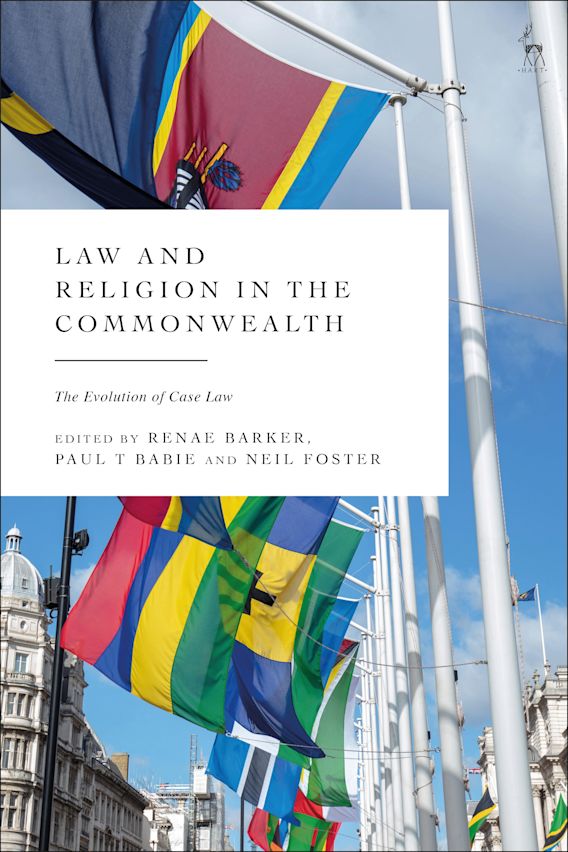
Law and Religion in the Commonwealth- paperback version

I previously posted about the publication of an edited collection of papers on Law and Religion issues around the Commonwealth, of which I am one of the editors. The book was available in hardcover and in an ebook version, but is now about to be released as a paperback in December. (The only difference is the reduced price!)

The publication date in Australia and New Zealand is 28 December 2023 and the webpage can be found here: https://www.bloomsbury.com/au/law-and-religion-in-the-commonwealth-9781509950188/

Readers of this blog can use the discount code GLR AQ7 , which entitles you to a 20% discount off a purchase of the book made on the Bloomsbury website

Just as a reminder:

Each chapter focuses on a specific case from a Commonwealth jurisdiction, examining the history and impact of the case, both within the originating jurisdiction and its wider global context.  

The book contains chapters from leading and emerging scholars from across the Commonwealth, including from the United Kingdom, Canada, Australia, Pakistan, Malaysia, India and Nigeria. 

The cases are divided into four sections covering:
– Foundational Questions in Law and Religion
– Freedom of Religion around the Commonwealth
– Religion and state relations around the Commonwealth
– Rights, Relationships and Religion around the Commonwealth.

Like religion itself, the case law covers a wide spectrum of life. This diversity is reflected in the cases covered in this book, which include: 
– Titular Roman Catholic Archbishop of Kuala Lumpur v Home Minister on the use of the Muslim name for God by non-Muslims in Malaysia
– The Church of the New Faith v Commissioner of Pay-roll Tax (Vic) which determined the meaning of religion in Australia 
– Eweida v UK which clarified the application of Article 9 of the European Convention on Human Rights 
– R v Big M Drug Mart on the individual protections of religious freedom under the Canadian Charter of Rights.  

The book examines how legal disputes involving religion are among the most contested in the courts and shows that in these cases, passions run high and the outcomes can have significant consequences for all involved.

My chapter is an analysis of the key Australian case, Christian Youth Camps Limited v Cobaw Community Health Services Limited and is sub-titled “Balancing Discrimination Rights with Religious Freedom of Organisations”.

Religious Discrimination Bill passes lower house along with SDA amendment

This morning Australia woke up to the news that at an all-night sitting which concluded around 5 am, the House of Representatives has passed the Religious Discrimination Bill 2022. (The link there will take you to official Parliamentary site for the Bill; as I write the updated version given a third reading has not been published but should be later in the day.) The government amendments which I noted in a previous post were apparently all accepted.

There was an amendment moved by the Opposition which came very close to being accepted, but which in the end did not pass. (It can be seen here in the Opposition amendments document.) It would have introduced a prohibition on “religious vilification”. I do not think Australia needs more such laws; in the time available now let me link a paper I produced a few years ago on the dangers of limiting free speech in this way.

However, the package of bills also includes the Human Rights Legislation Amendment Bill 2022, which saw an Opposition amendment accepted when 5 members of the government crossed the floor. The third reading text of that Bill, which will now go to the Senate with the other bills in the package, is available here. In effect, as had been foreshadowed, the Opposition amendment will repeal s 38(3) of the Sex Discrimination Act 1984 (Cth) (“SDS”). It will also amend s 37 of that Act to ensure that the general balancing clause in that Act cannot be used by religious schools to avoid the effect of the repeal of s 38(3).

Sub-section 38(3) is part of s 38 of the SDA, which allows educational institutions “conducted in accordance with the doctrines, tenets, beliefs or teachings of a particular religion or creed” to act in accordance with those beliefs even if such actions would otherwise amount to unlawful discrimination under the SDA. Sub-section (3) allows such actions “in connection with the provision of education or training”, despite the general prohibition on discrimination in those circumstances set out in s 21 of the Act.

The “presenting problem” was seen to be the possibility that a faith-based school would expel a student on the grounds of their sexual orientation or gender identity. Leave aside the fact that as far as I am aware no religious school in Australia has ever done this. What s 38(3) provides is a statement that a religious school can operate in teaching and caring for students in accordance with its faith commitments, which is the very reason for its existence! To simply repeal it is, in my view, a bad move.

To give an example: a student group wants to set up a “Pride” club supporting homosexual activity. This is contrary to the teachings of the religion. The school says the club cannot be advertised in the school newsletter or use school premises at lunchtime. Will the school be discriminating under s 21(2)(a) by  (a)  by “denying the student access, or limiting the student’s access, to any benefit provided by the [school]”? The answer is not clear. The decision is arguably not made “on the ground of” sexual orientation- the school can say it would deny such a request even if made by a group of heterosexual students. The school may be able to rely on the difference between decisions based on orientation, and decisions based on viewpoints about orientation, which lay behind the successful defence by Christian bakers in the UK who had declined to prepare a “Gay cake” (a decision recently affirmed in the European Court of Human Rights). But to do so it may require expensive and time-consuming litigation.

Other examples can be offered. A senior female prefect becomes pregnant, and is removed from the leadership group because her actions (while unmarried) contradict the school’s religious stance on sexual activity outside marriage. A male student identifies as female and demands to be allowed to use the girl’s change rooms, and is not allowed to. Many people in the community would object to these decisions taken by a school. But others, especially parents who have entrusted their children to these schools so that they can learn in an environment which support their own faith commitments, will support them. In a pluralistic society it seems clear that we should have room for religious communities to operate schools in accordance with their faith, especially when they are prepared to make financial sacrifices to pay for them.

These issues should not be resolved on the run by emotional appeals. The Australian Law Reform Commission is set up to conduct detailed inquiry into the matters, and should be allowed to move ahead with that inquiry to ensure that all relevant interests are heard and properly balanced.

Meanwhile, the package of Bills will now go to the Senate for further debate.

Parliamentary reports recommend passage of Religious Discrimination Bills

Two committees of the Australian Federal Parliament examining proposed legislation on religious discrimination handed down their reports on Friday 4 February, 2022. Both committees recommended that the Bills introduced in November 2021 be passed by the Parliament, with some minor amendments. The report of the Parliamentary Joint Committee on Human Rights (“PJCHR”) can be found here, and that of the Senate Legal and Constitutional Affairs Legislation Committee can be found here.

While each report mentions a number of objections to the legislative package, it is significant that these cross-party committees both end up by recommending the enactment of the laws in substantially their current form. In my view this is an encouraging sign, that may signal that the legislation might find sufficient support to pass the Parliament before an election is called this year.

(There were “additional comments” made by ALP members of both Committees, but they did not formally dissent from the majority recommendations. There was a formal dissent from the Greens Senator Janet Rice to both reports, joined in the Senate Committee by fellow Green Senator Lidia Thorpe. Liberal Senator Andrew Bragg provided “additional comments” to the Senate Committee report without formally dissenting.)

In this post I will briefly summarise the recommended amendments put forward by the committees, and some other issues that have been raised this week following events at Citipointe college which I discussed in a previous post.

Continue reading

The Religious Discrimination Bill arrives

After a long wait, the Federal government has released the text of the Religious Discrimination Bill 2021 which is about to be introduced into the Parliament. There has been no general Federal law dealing with detrimental treatment of Australians on the basis of their religious faith and activities, and this is a welcome development, implementing a recommendation of the Ruddock Review which reported in 2018.

The government previously released two “Exposure Drafts” of the Bill (see some comments on those in previous posts, here, and here.) Having promised prior to the last election that he would advance this law, Prime Minister Morrison will now introduce it into the House of Representatives. If passed by the House, the Bill will then need to approved by the Senate, where it seems likely to be referred to (yet another) committee before being voted on there, probably sometime in the New Year.

In this post I will aim to provide an overview of the Bill, and also to indicate briefly where it differs from previous drafts.

Continue reading

New academic journal on law and religion in Australia

It is exciting to see the start of a new academic journal on law and religion in Australia: the Australian Journal of Law and Religion. The editorial team includes previous guest “Law and Religion Australia” blogger Dr Alex Deagon from QUT, and Dr Jeremy Patrick from USQ. From the website:

The Australian Journal of Law and Religion is the first peer-reviewed, scholarly journal in the antipodes to focus on the interactions of faith and the legal system. Every issue features articles, short essays, and book reviews from a diverse array of scholars from across the spectrum of religions and ideologies. It is published with the support of the Law, Religion, and Heritage Research Program Team of the University of Southern Queensland.

The first issue will not be published until 2022, but this looks like a terrific initiative to support scholarly examination of this important area.