
ALRC inquiry into Religious Educational Institutions and Anti-Discrimination Laws

The Commonwealth Attorney-General has announced that the Australian Law Reform Commission will be conducting an inquiry into the general area of “Religious Educational Institutions and Anti-Discrimination Laws”. Detailed information about the inquiry can be seen at their home page.

Readers may recall that the ALRC had previously been given a wider inquiry by the former government: the web-page notes that

The Terms of Reference replace a previous Inquiry into religious exemptions in anti-discrimination legislation that has been on hold since March 2020.

This new inquiry, while narrower in terms of being limited to religious educational institutions, comes with a number of assumptions that some may find problematic:

The Terms of Reference describe the Government’s commitments as ensuring ‘that an educational institution conducted in accordance with the doctrines, tenets, beliefs or teachings of a particular religion or creed:

  • must not discriminate against a student on the basis of sexual orientation, gender identity, marital or relationship status or pregnancy;
  • must not discriminate against a member of staff on the basis of sex, sexual orientation, gender identity, marital or relationship status or pregnancy;
  • can continue to build a community of faith by giving preference, in good faith, to persons of the same religion as the educational institution in the selection of staff’.

The Commission has indicated that it will have regard to submissions made to the previous inquiry, but that it also “will undertake further consultations”. Organisations and individuals who are interested in making submissions to the inquiry (when public submissions are called for) can “subscribe” to email updates from the ALRC here. Given that the inquiry has quite a tight timeline (it is due to report on 21 April 2023) I suspect that submissions may need to be put together fairly quickly over the Christmas/New Year period.

Update

The ALRC has now released a consultation timetable (which can be seen here) which indicates that they will be releasing a discussion paper for general comments on 27 January 2023, to which responses need to be provided by 24 February 2023.
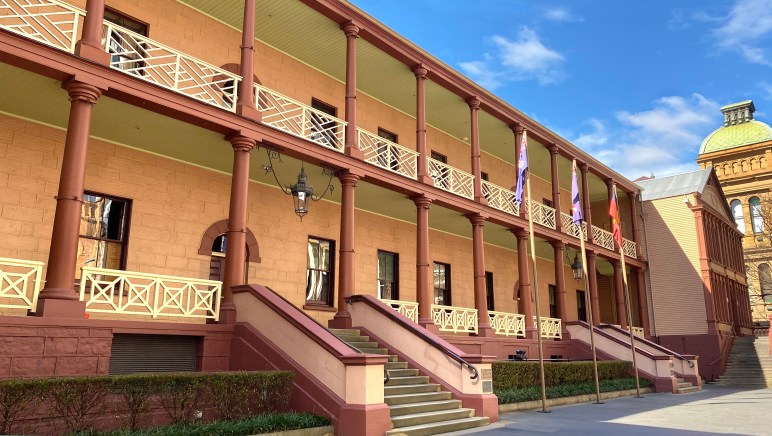

Newcastle Breakfast event for lawyers- Nov 30

For lawyers (and law students) who are interested in Law and Religion issues and are (or will be) in Newcastle on Wednesday Nov 30, our local lawyer’s Christian fellowship, in partnership with Sydney-based organisation Third Space, are running a breakfast seminar (7:30-8:30) on the topic “Wisdom for Good Government”.

The description of the topic and the speaker are as follows:

The governmental response to Covid-19 has precipitated (virtually unprecedented?) debate within Australian society about the proper reach of our authorities. The legitimacy or otherwise of ‘civil disobedience’ to legislative mandates has been hotly debated. How are we to chart a course through these choppy waters?

We are very pleased to have David Robertson as our speaker:

David Robertson is an experienced presenter and debater on the place of the Christian faith in the public sphere, a prolific blogger at The Wee Flea and he was the minister at St Peter’s Free Church in Dundee, Scotland for 27 years. David joined City Bible Forum in 2019 to lead a new initiative called Third Space. Whilst continuing to speak at City Legal, David also works with churches, seeking to help them communicate the good news in a world that desperately needs it.

The event will be held in room x-704 in the University of Newcastle city campus (“Nuspace”), on the corner of Hunter and Auckland Streets in the Newcastle CBD. Full details and a link to register can be found here: https://thirdspace.org.au/civicrm/event/info?id=2878&reset=1 . You can order some breakfast as well!

Football CEO dismissed for religious beliefs

The recently appointed new CEO of the Essendon Football Club in Victoria, Andrew Thorburn, has been pushed out of his job on account of views expressed by the church he belongs to and on whose board of management he sits. Those views, which even the club itself accepts were not stated personally by Mr Thorburn and which had to be found by scouring a database of sermons back to 2013, represent views on moral issues that have been shared by Christians, Muslims, Jews and many other religious believers for a long time. They are not “radical” or “hateful” or “bigoted”. It is arguable that the Club has breached Victorian anti-discrimination law.

Continue reading

Legal issues arising for Christian schools in NSW

I recently presented a paper exploring legal issues arising for Christian schools in NSW, which I thought may be of general interest. It also discusses developments in other Australian jurisdictions which may have an impact on NSW law in the future. The paper can be downloaded here:

An Anglican “lifeboat” for Australia

We have recently seen the announcement of the activation of a new “extra-provincial” Anglican diocese in Australia. The “Diocese of the Southern Cross” (“DSC”) is not a part of the official “Anglican Church of Australia” (“ACA”). It has been set up to provide an ecclesiastical home for congregations who are Anglican by theology and conviction but find themselves unable to accept the authority of bishops of the ACA who do not accept the teachings of the Bible, especially on the subject of the Biblical views of marriage. So the far the DSC has only one congregation in its network, but there may be others who join as the divide within Anglicans in Australia deepens.

Continue reading

First volume of Australian Journal of Law and Religion published

Great to see that the first volume of the Australian Journal of Law and Religion has been published: see here. All articles are free to download. Congratulations to editors Alex Deagon and Jeremy Patrick on this new venture! I am honoured to have an article in this first issue on “Religious Freedom, Section 109 of the Constitution, and Anti-discrimination Laws”.

For convenience, here is a copy of the first table of contents:

Articles

Law and Religion in the Classroom: Teaching Church-State Relationships: Renae Barker

The Formation of Islamic Law in Indonesia: The Interplay Between Islamic Authorities and the State: Muhammad Latif Fauzi

Religious Freedom, Section 109 of the Constitution, and Anti-discrimination Laws: Neil Foster

Why the Jury in Pell v The Queen Must Have Had a Doubt and the High Court was Right to Quash the Guilty Verdicts: Andrew Hemming

Adolescent Gender Identity and the Sex Discrimination Act: The Case for Religious Exemptions: Patrick Parkinson

Book Reviews

Christians: The Urgent Case for Jesus in Our World by Greg Sheridan: Katie Murray

Law and Religion in the Liberal State edited by Md Jahid Hossain Bhuiyan and Darryn Jensen: Jeremy Patrick

Special Topic Forum: The Future of Law and Religion in Australia

The Continued Existence of the Crime of Blasphemy in Australia: Luke Beck

Proportionality in Australian Constitutional Law: Next Stop Section 116?: Anthony Gray

The Liberal and Post-Liberal Futures of Law and Religion in Australia: Joel Harrison

Happy reading!

ACT Discrimination Law “Reforms” Narrow Religious Freedom

The Australian Capital Territory government has released an Exposure Draft of a Bill to amend that jurisdiction’s Discrimination Act 1991 (“DA”). They have invited public comment by 1 July 2022. As key protections for religious freedom in Australia are often found in “balancing clauses” in discrimination legislation, it is always worth keeping an eye on reforms to these laws. Sadly, these proposed reforms will significantly narrow religious freedom protections in the ACT.

Continue reading

Religious Freedom Challenges for Theological Colleges in Australia

I am presenting a paper to a seminar for senior leaders in Australian theological colleges, dealing with religious freedom challenges. I comment briefly on some of the current protections provided, but also how those protection have been eroded recently, especially in Victoria (where amendments to the Equal Opportunity Act 2010 (Vic) which I previously commented on have now commenced.) A copy of the paper can be downloaded here:

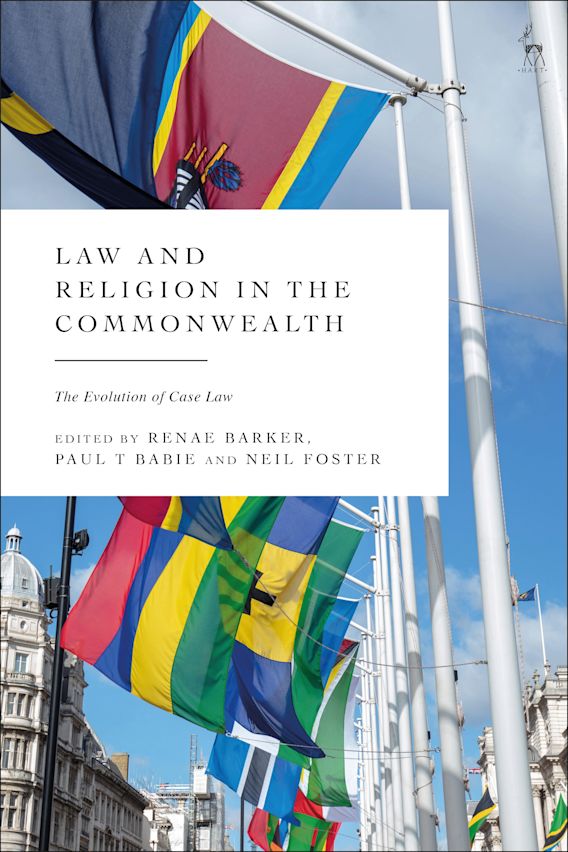
New book: Law and Religion in the Commonwealth

I am pleased to announce that a new book of which I am one of the editors will be published on 30 June. The book is Law and Religion in the Commonwealth: The Evolution of Case Law (Hart/Bloomsbury, 2022) and my esteemed co-editors are Dr Renae Barker (UWA) and Professor Paul Babie (Adelaide). The book is a collection of studies of law and religion issues from around the Commonwealth of Nations, from established scholars and also from some who are just starting out.

From the publisher’s description:

Each chapter focuses on a specific case from a Commonwealth jurisdiction, examining the history and impact of the case, both within the originating jurisdiction and its wider global context.  

The book contains chapters from leading and emerging scholars from across the Commonwealth, including from the United Kingdom, Canada, Australia, Pakistan, Malaysia, India and Nigeria. 

The cases are divided into four sections covering:
– Foundational Questions in Law and Religion
– Freedom of Religion around the Commonwealth
– Religion and state relations around the Commonwealth
– Rights, Relationships and Religion around the Commonwealth.

Like religion itself, the case law covers a wide spectrum of life. This diversity is reflected in the cases covered in this book, which include: 
– Titular Roman Catholic Archbishop of Kuala Lumpur v Home Minister on the use of the Muslim name for God by non-Muslims in Malaysia
– The Church of the New Faith v Commissioner of Pay-roll Tax (Vic) which determined the meaning of religion in Australia 
– Eweida v UK which clarified the application of Article 9 of the European Convention on Human Rights 
– R v Big M Drug Mart on the individual protections of religious freedom under the Canadian Charter of Rights.  

The book examines how legal disputes involving religion are among the most contested in the courts and shows that in these cases, passions run high and the outcomes can have significant consequences for all involved.

My chapter is an analysis of the key Australian case, Christian Youth Camps Limited v Cobaw Community Health Services Limited and is sub-titled “Balancing Discrimination Rights with Religious Freedom of Organisations”. The book can be pre-ordered here, and will be available from June 30.

More information about the book, and a sample of the first chapter, can be seen here.

Blessing same sex marriages in the Anglican Church in Australia

The question as to whether same sex marriages entered into under Australian civil law can be blessed in an Anglican Church service is one that has generated much disagreement within the church. An important Opinion of the Appellate Tribunal of the Anglican Church of Australia in relation to a question posed by the Diocese of Wangaratta (Primate’s References re Wangaratta Blessing Service, 11 Nov 2020) held that it is lawful for a diocese to approve such a formal blessing. I have now contributed a chapter to a book of essays prepared for the consideration of the forthcoming General Synod discussing the issue, analysing the Majority Opinion and its implications. The chapter is available for download here, for those who are interested. I conclude, in brief, that as a matter of internal Anglican doctrine, the decision is contrary to the “doctrine of the Church”, which finds its ultimate source in the Bible. The Majority Opinion takes a too narrow view of the word “doctrine”, in my view. I suggest that this may have consequences outside the church:

unfortunately the narrow view taken by the Majority Opinion of the Appellate Tribunal may encourage a narrow view of the word to be taken by [secular] courts in the future, with the result that clauses protecting religious freedom may be unduly read down.

At p 47.

From the perspective of the general law of Australia, a church which declined to bless a same sex marriage might be accused of “sexual orientation” discrimination if they would offer such a blessing to a heterosexual couple. But balancing clauses under discrimination law would seem to have the effect that such a decision would not amount to unlawful discrimination, if the decision was:

(d) [an] act or practice of a body established to propagate religion that conforms to the doctrines of that religion or is necessary to avoid injury to the religious susceptibilities of the adherents of that religion.

Section 56, Anti-Discrimination Act 1977 (NSW)

(See also the similar provision in s 37 of the Sex Discrimination Act 1984 (Cth).)

It seems to me to be fairly clear that the “doctrines” of the Anglican Church would prevent the blessing of a same sex marriage. Indeed, the General Synod of the church said as much in a 2017 resolution:

the doctrine of our church, in line with traditional Christian teaching, is that marriage is an exclusive and lifelong union of a man and a woman (emphasis added)

See ‘MARRIAGE, SAME-SEX MARRIAGE AND THE BLESSING OF SAME-SEX RELATIONSHIPS’, adopted 7 Sept, 2017, at https://anglican.org.au/the-general-synod/search-resolutions-of-gs-sessions/?sid=2827  

But the Majority Opinion of the Appellate Tribunal might cast some doubt on that proposition, and as a result needs urgent consideration by the next General Synod.