
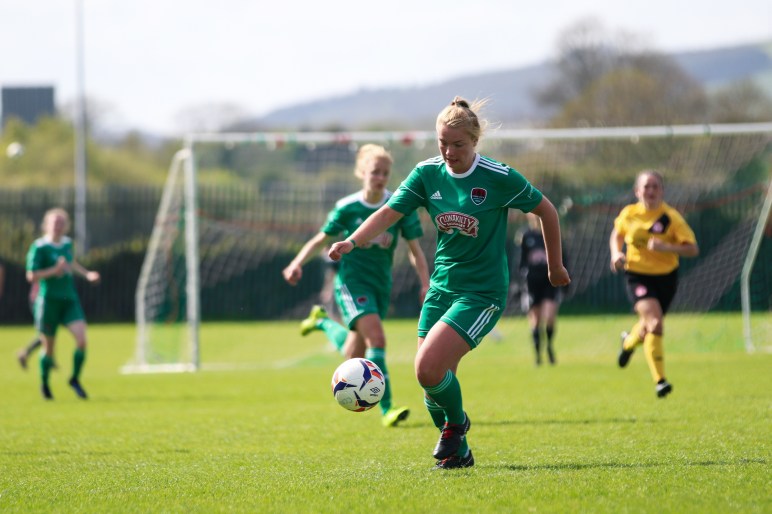
I have written previously about litigation involving Kirralie Smith stemming from her comments about a biological male playing in a womens’ football team. In that post I noted the decision in the NSW Civil and Administrative Tribunal (“NCAT”) in Blanch v Smith [2024] NSWCATAD 20 (22 January 2024). Ms Smith is part of an advocacy organisation, Binary Australia Ltd, which advocates for sex-based rights, especially for women, and sometimes posts about transgender males who have been allowed to compete in women’s sport. Stephanie Blanch was mentioned on the website of Binary and elsewhere online in this context, and then claimed that this amounted to “transgender vilification” under sections 38S(1)(a) and 52 of the NSW Anti-Discrimination Act 1975 (“ADA”). As the judge in the liability proceedings noted below commented at para [3]:
the Plaintiff is a transgender woman. She was born a male and has lived solely as a woman since 2016.
Ms Smith’s case was then transferred for constitutional reasons to the Local Court, where she was subsequently found to have been guilty of vilification. Most recently, in a decision involving Blanch and also in a case mounted by Riley Dennis, Ms Smith was fined and found to be liable for costs. In my view all of these four recent decisions were wrong, and I hope will be overturned on appeal.
These are significant cases which, while not directly raising “law and religion” issues, deal with issues of free speech which are important to many believers. As I said previously:
[M]any religious believers will follow the teachings of their faith, and most mainstream faiths stress the important of sexual identity based on biology as part of the divine purpose for humanity. For those who would like to explore the issues here from a Christian perspective, I highly recommend the excellent coverage of the area from Patricia Weerakoon, Robert Smith and Kamal Weerakoon, The Gender Revolution: A Biblical, Biological and Compassionate Response (Sydney: Matthias Media, 2023). Those who are convinced about the important of sex as a biological reality on religious grounds, should be grateful for the courageous stance of those who have stood for this principle on general grounds of logic and as committed feminists, who see the dangers for women and children in unchallenged “gender theory”.
I can now add to the above recommendation for reading, Dr Robert Smith’s more recently published detailed exploration of gender theory and the Christian faith, The Body God Gives: A Biblical Response to Transgender Theory (Lexham, 2025).
The Litigation
As noted, the case mentioned above heard in NCAT was dismissed for constitutional reasons, the High Court having previously ruled in Burns v Corbett [2018] HCA 15 (see my post on this decision here), that tribunals which are not actually established as “courts”, cannot legally hear claims which involve matters involving the interpretation of the Constitution. The two cases (involving Blanch and Dennis) were then transferred to the NSW Local Court.
I should also mention that there is a parallel set of proceedings involving a claim by Blanch for an “Apprehended Personal Violence Order”, separate to the claims made in relation to “vilification”. This case against Ms Smith was at first dismissed by a Local Court magistrate, but this decision was then overturned on appeal to the District Court (see Blanch v Smith [2024] NSWDC 631 (20 Dec 2024)) and a further appeal by Ms Smith to the NSW Court of Appeal failed (Smith v Blanch [2025] NSWCA 188 (15 Aug 2025)). (I note that the High Court has now refused special leave to appeal in these proceedings: see Smith v Blanch & Ors [2025] HCADisp 288 (4 December 2025).) In the interests of not complicating my discussion more than necessary, I will not be commenting in any detail on the APVO litigation. (I have serious concerns about whether this law should be used at all in the absence of any threats of actual violence, but I will not comment further on that point here.) Instead, I will be focussed on the “vilification” litigation.
I am writing this following the dreadful events at Bondi Beach on 14 December 2025, when 15 people at an event celebrating the Jewish festival of Hanukkah were killed by two violent Muslim terrorists. Much of the debate about what might have been done to prevent this massacre has involved discussion of “hate speech” laws. For the moment all I want to say about that debate is that I can see good arguments for banning speech that advocates violence against others on religious grounds, such as in the case involving Islamic preacher William Haddad, Wertheim v Haddad [2025] FCA 720 (1 July 2025), which I previously noted in a paper on the topic of vilification laws (see pp 5, 14-21 of that paper.) However, in my view laws banning speech which merely “offends” or insults are a bad idea, and governments should not be drafting any proposed new “vilification” laws too broadly. (I hope to be able to make a separate comment on the recently enacted federal “hate speech” laws soon.) On no view of the facts in Ms Smith’s case, however, was she in any way advocating violence.
To return to Ms Smith’s litigation: what has she done that was found to amount to “vilification”? The two judgments finding her guilty are lengthy, though there is much that is “cut and pasted” from one to the other in terms of legal analysis.
In the Blanch case, in January 2023 Ms Smith posted online her concerns that a male was playing in a women’s football team, and later posted a photo of Blanch and identified the specific team. She used the phrase “a bloke in a frock”. In later posts she repeated that a man was playing in a women’s football team. In February there was an occasion where Ms Smith visited the ground when the team was playing, accompanied by 7 or 8 men wearing brightly coloured wigs. In March she commented online that “it is alleged two female soccer players were hospitalized over the weekend after being forced to play against a male appropriating womanhood.” (It is not clear whether or not this report was ever confirmed). She also prepared a report on the issues which was submitted privately to Football Australia.
In the first case, dealing with liability for vilification, Blanch v Smith (Local Court of NSW, unreported; File No 2024/78280, Deputy Chief Magistrate Freund; 26 August 2025) (Blanch Liability) DCM Freund set out two of the main issues as follows, at para [11]:
Did the acts of the Defendants vilify the Plaintiff?
Were the acts carried out reasonably and in good faith pursuant tosection 38S(2)(c) of the Anti Discrimination Act?
(The plural refers to Ms Smith and the organisation Binary, but for our purposes we will focus on Ms Smith’s actions.)
Blanch- was there vilification on relevant grounds?
The first thing to note about the first issue (was there vilification?) is that framing the question this way leaves out a key element of the prohibition. Section 38S(1)(a) ADA is as follows:
38S TRANSGENDER VILIFICATION UNLAWFUL
(1) It is unlawful for a person, by a public act, to incite hatred towards, serious contempt for, or severe ridicule of- (a) a person on the ground that the person is a transgender person…
We note that crucially, the “incitement” of various emotions or actions must be carried out “on the ground that the person is a transgender person”. The basis for the unlawful actions must be the identity of the “target” person as a transgender person. But in my view what is noted above was not done on that ground. Ms Smith’s comments and actions were based on her concerns that a biological male was playing in a women’s football competition. Noting that Blanch was a “bloke in a frock” was a shorthand way of stating that Blanch was a male purporting to act as a female, in the context of a physical contact sport which was designed to only be run for females.
The fact that we have separate men’s and women’s competitions in sporting events is obvious. The reason for this is also obvious. It is not “sexism”- it is a recognition that as a whole, men have a number of physiological advantages over women, that it is unfair for women to compete in most sports directly against men, and that in some cases there are examples of women being injured when playing contact sports with men. (For a summary of scientific evidence supporting the need for sex-specific sporting teams and events, see the post “The Science Behind the Sex Divide in Sports” from March 2025, summarising a more detailed academic study.) Just recently we saw a graphic illustration of these facts in a high-profile tennis match between world number one women’s champion Aryna Sabalenka, and Nick Kyrgios, ranked 671st in the men’s rankings, which saw Kyrgios win.
In the Blanch Liability decision, DCM Freund ruled that all the actions noted above were “public acts” except the submission of a private report to Football Australia – [44]. The question then was whether those other acts breached s 38S(1)(a). As counsel for Ms Smith noted at para [50](d), there was “no call to action, urging, rousing, command, request, proposition or encouragement for the community to take any particular action.” The Court of Appeal decision in Sunol-v- Collier (No 2) [2012] NSWCA 44 at [79] had warned that a similar prohibition in the ADA was not breached merely because someone was upset. “Mere insults, invective or abuse will not engage the prohibition”- there had to be some “incitement” of others (noted in Blanch Liability at [52], [54]).
Despite these facts, DCM Freund went on to rule that Ms Smith was guilty of transgender vilification. But there are a number of concerning features of the reasoning. One is that the heading to the relevant discussion from para [45] is “Were the acts capable of inciting hatred of, serious contempt for, or severe ridicule of the Plaintiff?“ That is not the correct question- a mere “tendency” to do these these things (whether the acts were “capable” of such incitement) is not enough to make the acts unlawful. The words must actually incite the relevant emotions or action on the relevant ground.
The discussion then later says that Ms Smith’s words in a January 2023 article, according to DCM Freund, had sought to create”fear” in the reader, by noting, at [63], the consequences of a male playing in the women’s team, such as “Why should parents be put in the terrible situation of having to deal with an adult man in their daughter’s bathroom?”
This was then followed shortly afterwards by the conclusion:
[65] Accordingly, I am satisfied on balance that the January Article had the capacity to encourage or spur others to harbour emotions of hatred towards, severe contempt for and or severe ridicule of the Plaintiff, on the grounds that the Plaintiff is transgender.
With respect, the conclusion does not follow from the premises. Formally, the suggestion at [63] of involving “fear” for safety, is not tied to the relevant emotions in s 38S- there is no reference in the previous findings to “hatred” or “severe contempt”. One can surely “fear”- in the sense of apprehend harm from – someone, without necessarily feeling hatred or contempt for the person. At the very least there should have been a clear finding on the issue.
A second article from February 2023, which referred to “complaints about a male player on the female team in Wingham” but did not feature a photograph of, or name, the plaintiff, was found not to breach s 38S- see paras [66]-[68]. Nor did a Newsletter raising the issue but also with no photograph of the plaintiff- see paras [69]-[71]. It should also be noted that her Honour ruled that the event featuring men wearing wigs was not an act of vilification – see para [86].
The key paragraph holding that vilification occurred came at the end of an account of how social media sharing of the January 2023 article led to various nasty comments from members of the public who had seen it- one quoted in the decision (provided in an Exhibit filed by the plaintiff Blanch) at [77] was: “This loser was born male, is male, will die a male & identifying as anything else won’t change the facts.” Others were similar in nature.
Clearly one can see this as “severe contempt”. It may also amount to “ridicule”. So it may be concluded that these members of the public were “incited” to these emotions. But the question remains- were they so incited “on the ground that the [plaintiff] is a transgender person?” The clear fact is that the articles and comments by Ms Smith were not aimed at Blanch simply because of identification as a member of the opposite sex. Reference to a “bloke in a frock” was in the specific context of a biological male playing in a women’s football team. Her Honour’s very brief discussion of this key issue at paras [89]-[90] is not persuasive. It is not as if Ms Smith found a photograph of the plaintiff from some random context and then posted it for purposes of ridicule. The photograph was actually taken from a social media page of the football club.
Once again, the facts found by DCM Freund do not seem to be sufficient to make the actions of Ms Smith unlawful. A key paragraph in this part of the decision is as follows:
[82] Accordingly, I am satisfied on balance that Social Media Posts (which are conceded to be public acts) which included one or more of the following:
a. A picture of the Plaintiff’s face
b. A link to the January Article
c. Named the soccer club and its location where the Plaintiff played, namely Wingham; and
d. Referred to the Plaintiff by way of a “man”, “bloke”, “bloke in a dress”
were acts capable of inciting serious contempt for, to mock, to incite hatred of and to severely ridicule the Plaintiff, on the grounds that the Plaintiff is transgender.
Again with respect, I disagree that these findings are sufficient. The same point as made above can be made here: it is not sufficient to find that acts are “capable” of inciting. The extra words “to mock” are not included in s 38S. Mere “mockery” (as with mere “insults, invective or abuse”, as noted above) will not make the acts unlawful, and including those words raises serious doubts as to whether her Honour has misdirected herself about what needs to be established. And, of course, as I have already argued, any incitement that there was, was not on the grounds of transgender status, but as part of expressing concerns about the real and important issue of whether males should be playing in women’s sporting teams.
To sum up on the breach of s 38S(1), only two of the suggested categories of posts were found to be unlawful vilification- the January 2023 article and social media posts sharing that article.
Blanch- did the defence apply?
It was then necessary for her Honour to rule on whether the “defence” contained in s 38S(2) was established. The relevant provision reads as follows:
38S(2) Nothing in this section renders unlawful– … (c) a public act, done reasonably and in good faith, for academic, artistic, scientific, research or religious discussion or instruction purposes or for other purposes in the public interest, including discussion or debate about and expositions of any act or matter.
There is much good learning on the issues of “reasonably and in good faith” in previous decisions on other forms of “vilification”. Many of these are cited at length by her Honour. Sadly, she then seems to ignore what the quotations teach and to decide this question, again, on a ground not in the Act. I will not rehearse the careful comments of previous superior courts, in a post that has already gone too long, but let me note the basis for her Honour’s ruling that the defence in s 38S(2) was not made out.
First, it must be noted that even the plaintiff conceded at [104] that “the participation of transgender women in women’s sport” was a matter of genuine public interest. Second, her Honour agreed at [120] that the acts of Ms Smith “do bear a rational relationship to the protected activity, namely, to promote the discussion and debate about transgender women playing on women’s sports team“. However, her Honour then ruled that what Ms Smith had done was not “proportionate”:
[120]…using the Plaintiff as an example to illustrate its position and as a “sticking point” … was disproportionate to what was necessary and accordingly was not reasonable.
There are a number of problems with this ruling. The most obvious is the unusual phrase “sticking point”. It may be connected with a metaphor used by counsel for the plaintiff at [104], referring to an alleged use of the plaintiff as a “kicking horse”. Later at [107] the defendant had denied using the plaintiff as a “sticking point”. It seems perhaps that all parties (and her Honour) may have been intending to use the metaphor of a “stalking horse”, defined by the Oxford English Dictionary in its figurative sense as: “A thing used as a false expedient or pretext concealing a person’s real intentions or actions…”
That does not quite seem to fit, but there may be an implicit suggestion that the plaintiff had some ulterior motive in referring to the defendant. If so, that would be a clear mistake- it seems to have been accepted that she was genuine and transparent in simply calling out someone who was a male for competing in a women’s sporting team.
Putting that to one side, a key issue which recurs on a regular basis is the use by the plaintiff of the defendant’s photograph. Yet, as noted already, this had been taken from a public social media post made by the local football team. Insofar as the defendant was being singled out, the plaintiff in arguing her case that men should not be involved in women’s teams, faced the need to prove her case by at least one or two clear examples. Should no examples have been offered, she would face the response that her claims were imaginary and that this “never happens”. It seems clear that in making a good faith comment on this important matter of public interest, she needed to provide actual examples. She did this without in any way calling for violence or action against the individuals concerned. It seems far too harsh to say that this was a “disproportionate” way of making her point. What she said could have been said, clearly, with more restraint and more politely. But if all that is allowed in public speech is politeness, we are losing the battle for free speech altogether!
Finally, her Honour was asked to consider whether the operation of the law in this case was an infringement of the implied constitutional right to freedom of political speech. In this already long post I won’t go onto the analysis in any detail, except to say that a similar issue had been considered by the NSW Court of Appeal in the related (AVO) litigation I have already mentioned: see Smith v Blanch [2025] NSWCA 188 (15 Aug 2025) at [154]-[167]. While the legislation there being considered was not the same as the vilification prohibition being considered here, the analysis of the Court of Appeal generally supported the view that the ADA prohibition was not an undue interference with free speech. I think more could be said about this but will leave this matter for future discussion.
Blanch- imposition of civil damages and costs
In the later Damages proceedings, Blanch v Smith (No 2) (Local Court of NSW, unreported; File No 2024/78280, Deputy Chief Magistrate Freund; 5 Dec 2025) her Honour ordered that Ms Smith
- Pay $55,000 in damages;
- Remove material which was found to be vilification from social media;
- Publish a “correction notice”.
There are, however, some odd features about this Damages decision. One is that her Honour weighs up previous vilification damages awards and concludes that Ms Smith’s publications were “more serious” than some of those prior cases. But those prior cases included examples where the defendant had very clearly expressed an intention to commit violence against the plaintiff- in one case, at para [37](d), the defendant had explicitly said “I’m going to kill you”, and had an award made against them of only $10,000! The only way in which Ms Smith’s case was said to be “more serious” was that her comments had reached a wider audience.
But the oddest feature of the damages award is that at para [38] her Honour says: “| award the Plaintiff the sum of $40,000 in general damages”, she then declines to award any “aggravated damages” (see [42]), but in her concluding comments, without so far as I can see any justification, she declares that the damages award is the higher amount of $55,000. This is very strange and seems to have been a mistake.
Dennis v Smith
The other decisions which were handed down at the same time were those involving Riley Dennis, who was also a football player (though in a Sydney team, not in the same football team as Blanch). The cases were: Dennis v Smith ((Local Court of NSW, unreported; File No 2024/220187, Deputy Chief Magistrate Freund; 26 August 2025), the liability decision, and Dennis v Smith (No 2) ((Local Court of NSW, unreported; File No 2024/220187, Deputy Chief Magistrate Freund; 5 Dec 2025), the award of damages.
The reasoning in the Dennis cases is similar to that in the Blanch cases (indeed, often cut and pasted from the other, which is understandable), so I will just mention the major differences briefly. Dennis was a player in a Sydney football team who is described as a “transgender woman” (para [3] of the Dennis liability decision.) An online link to the Football NSW Goal Scorers Leaderboard named Dennis as the top goal scorer for the season. When Ms Smith pointed this out the link to the leaderboard was removed. Ms Smith commented: “Why is @FootballNSW going to such great lengths to hide the evidence that a male player is top of the women’s leaderboard?”.
Freund DCM found that Ms Smith’s comments online, and later interviews she gave to some media outlets, were public acts- see para [32]. (However, it was at least ruled that Ms Smith could not be held responsible for all the comments made by the media who had interviewed her- see [58]). It was found at [55] that the comments were “capable” of inciting relevant emotions, and that this was done on the ground that Dennis was a transgender person. As noted above, it seems arguable that the comments were not made on the basis of Dennis’ identity as “trans”, but on the basis that a biological male was inappropriately and unfairly competing in a women’s competition.
In considering the defence of good faith for a public purpose, as with Blanch, Freund DCM stressed that the identification of Dennis went beyond what was needed to achieve the purpose of debating the issues around biological males competing in women’s sport. The rejection of this defence seems, with respect, to be especially weak. To make a persuasive case there at least needs to be one or two specific examples provided. This was arguably done here in a way which did not urge any action be taken against Dennis, simply noting the accepted facts.
The discussion in Dennis of the implied freedom replicated that discussion in the Blanch case (somewhat unfortunately, a bit too closely, as in para [95] her Honour referred to the “Plaintiff in this matter” as being the plaintiff in the Court of Appeal decision in Blanch v Smith, which is of course not the case. Dennis was not involved in the AVO proceedings discussed in the prior Court of Appeal decision.)
In the damages ruling for Dennis, similar comments are made as noted above in Blanch (No 2), although for Dennis the award of damages is left at the $40,000 which corresponds to the award that it seems was intended to have been made in Blanch; see Dennis (No 2) at para [37] and the final order.
To sum up, in my view the liability decisions in both sets of proceedings were wrong, and there are good reasons to question the level of any damages award even if liability had been established. It is understood that the decisions will be appealed. There seem very good grounds to do so.
 Law and Religion Australia